cooking · Recipe
Sarmale cu legume la borcan murate
From a video by Mancare cu savoare · 10 min watch
Fermented jarred cabbage rolls filled with a salted, grated vegetable mixture of cabbage, peppers, celery, carrot and beetroot, packed with horseradish and spices and covered with a hot brine made from the vegetables' own juices.
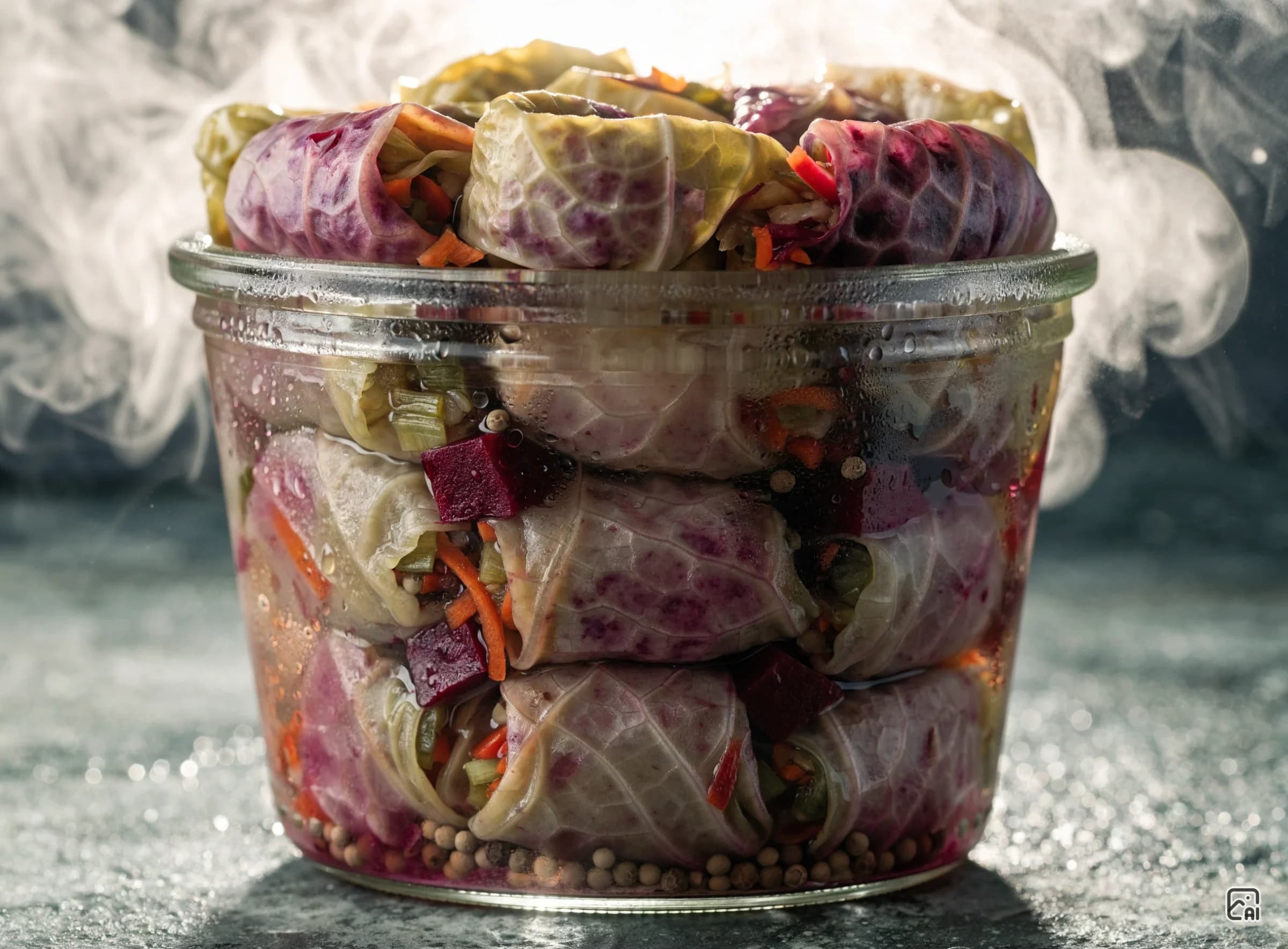
Source video — Mancare cu savoare on YouTube
From the creator
Total time
~2 hoursWe estimated this from the recipe steps and ingredients; the source didn't state it.
Hands-on
~35 minutesWe estimated this from the recipe steps and ingredients; the source didn't state it.
Servings
~24 servingsWe couldn't confirm this against the source, so it's marked as an estimate.
Difficulty
EasyWe estimated this from the recipe steps and ingredients; the source didn't state it.
Extraction confidence: high
Auto-generated from the video and rewritten in our own words. Double-check quantities against the source before cooking.
Ingredients
Ingredients scaled to 24 servings
- 1 fresh white cabbage
- 1 whole cabbage, frozen then thawed
- 3–4 bell pepper
- 1–2 red beetroot
- 250 g carrot
- 1 celery root with leaves
- 2 tablespoons coarse non-iodized pickling salt
- 1 red beetroot, diced
- 1 horseradish
- 1 tablespoon black peppercorns
- 1 tablespoon mustard seeds
- 1 teaspoon dried basil
- 2–3 tablespoons 9% wine vinegar
- 3 l water
- 3 tablespoons coarse non-iodized pickling salt
Preparation
- Step 1Clean and wash the fresh cabbage, cut it into quarters, remove the cores and shred it as thinly as possible into a large bowl.
- Step 2Clean the peppers of stems and seeds, wash them, cut them into thin strips and then into small cubes, and tip them over the cabbage.
- Step 3Chop the green leaves of the celery finely and add them to the bowl, then grate the celery root on the coarse side of a grater.
- Step 4Grate the carrot and the beetroot pieces the same way and gather all the colorful vegetables together in one place.
- Step 5Add the coarse salt over the vegetables, mix everything very well and rub the vegetables firmly between your hands to break down the fibers and release their juices.
- Step 6Let the mixture rest for at least two to three hours, stirring it occasionally; it will soften and reduce considerably in volume.
- Step 7While the filling rests, prepare the leaves: cut around the core of the thawed cabbage and separate it leaf by leaf; the darker color of the thawed leaves is normal.
- Step 8Remove the tougher central rib from each leaf with a knife.
- Step 9If the leaves still seem insufficiently softened, hollow out the core and dip the cabbage in hot water for 4-5 minutes to make the leaves soft and pliable.
- Step 10Take a prepared cabbage leaf, place a generous spoonful of the vegetable mixture on it and roll it exactly as classic meat sarmale, tucking in the ends well.
- Step 11Continue filling and rolling until all the mixture is used up.
- Step 12Bring a perfectly clean, dry jar and start packing the rolls in, pressing them one next to the other so no gaps remain.
- Step 13Between the layers scatter pieces of horseradish to keep them firm long-term, pieces of beetroot for color, and part of the peppercorns, mustard seeds and basil.
- Step 14At the top add more spices and the vinegar, about two teaspoons per small jar or two full tablespoons per 3 L jar; the vinegar prevents excessive softening and keeps them crunchy without stopping natural fermentation.
- Step 15For the brine, add the coarse non-iodized salt to the cold water, then pour in all the liquid the vegetable mixture released in the bowl and mix well until the salt dissolves completely.
- Step 16Heat the brine in a pot until almost boiling so the salt dissolves fully.
- Step 17Pour the hot brine into the jars, covering everything well and leaving about two fingers of space up to the jar rim.
- Step 18If you have a cool place or cold cellar, screw the lids on tightly and take the jars there immediately; if they sit at a slightly higher temperature, do not seal them definitively in the first week, place them on a tray since liquid may overflow, and tighten the lids fully only once the fermentation has settled completely.