candy · dessert
Cannoli - Authentic Italian Hand-Rolled
From a video by Amo Pão Caseiro · 15 min watch
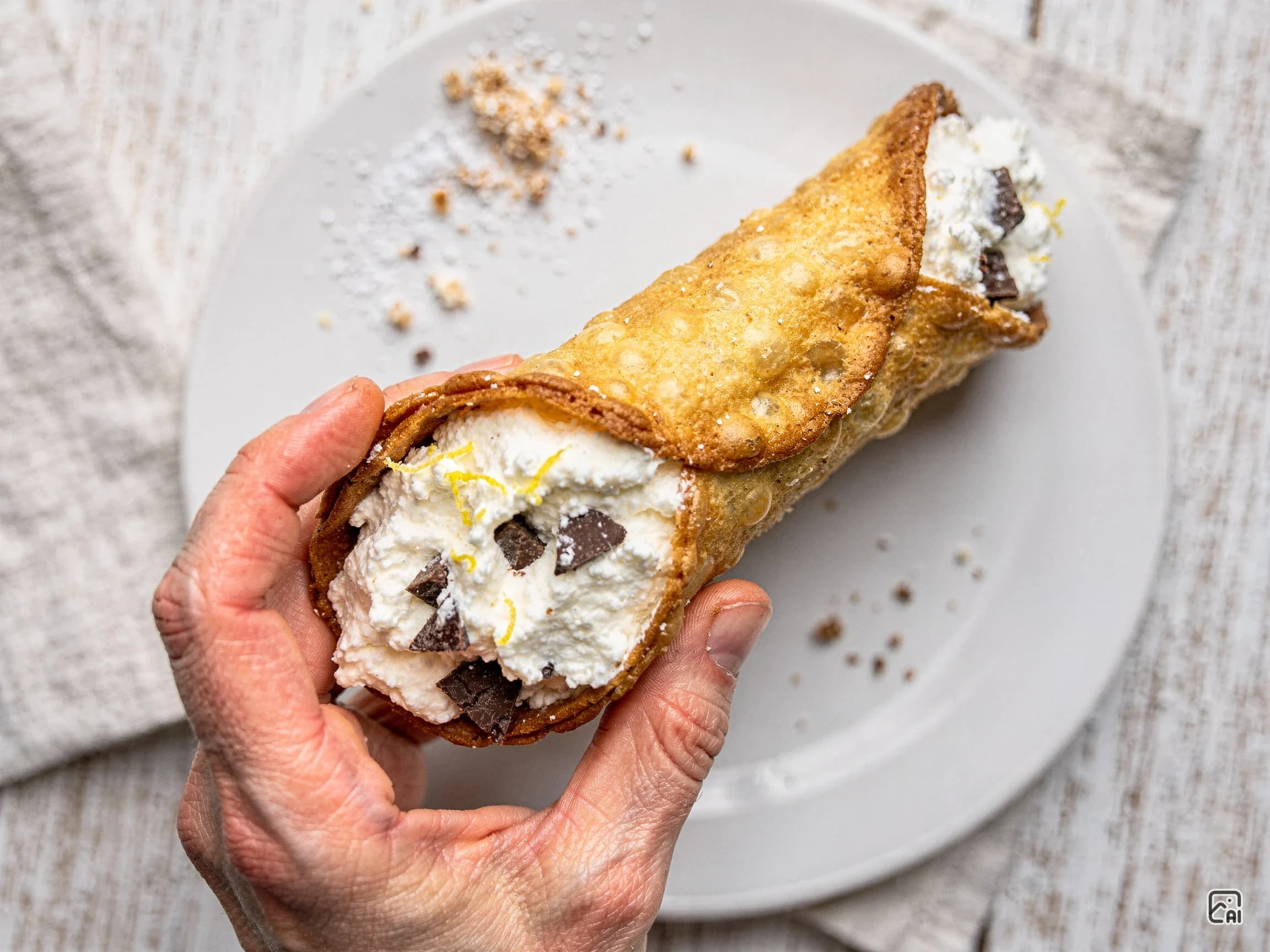
Traditional Sicilian cannoli shells hand-rolled and fried until crisp and bubbly, filled with sweetened ricotta cream studded with milk chocolate and lemon zest.
dessertItalianSicilian
Source video — Amo Pão Caseiro on YouTube
From the creator
Total time
2 hours+
Hands-on
15 minutes
Servings
~12 servingsEstimated by Unreel from the complete recipe.
Difficulty
EasyEstimated by Unreel from the recipe steps — the creator didn't state this.
Extraction confidence: high
Auto-generated from the video and rewritten in our own words. Double-check quantities against the source before cooking.
Ingredients
Ingredients scaled to 12 servings
- 200 g Wheat flour
- 20 g Sugar
- 2 g Salt
- 2 g Cocoa powder
- 20 g Pork lard
- ½ Egg
- 60 g Marsala wine (or substitute)
- 400 g Fresh ricotta
- 160 g Sugar
- 60 g Milk chocolate
- ½ Lemon zest
- Frying oil
Preparation
- Step 1Combine the flour, sugar, salt, and cocoa powder in a large bowl. Add the lard and mix in. Beat an egg, add half to the bowl, and reserve the other half for sealing. Add the liquid (Marsala wine or the vinegar-water substitute). Stir from the center outward, gradually incorporating the dry flour from the sides first with a spoon then by hand until the dough is uniform, cleans the bowl, and has some elasticity. If the dough is too dry, add 5-10 g water. Form into a ball, wrap in plastic film, and refrigerate for at least 1 hour (or overnight).
- Step 2Mash the fresh ricotta with a fork. Place in a strainer set over a bowl, cover with a cloth, and refrigerate to drain while the dough rests.
- Step 3Sprinkle flour on the work surface and on the rested dough. Press with fingers to flatten, turning to coat both sides. Position a rolling pin in the center and roll outward to the top edge, return to center, then roll to the bottom edge, always working from center to edges. When the dough exceeds 20 cm in width, fold the top down to two-thirds and fold the bottom up to meet it. Perform 2-3 such folds to develop gluten and trap air for characteristic bubbles. If the dough becomes hard to roll, cover and rest 5-10 minutes to relax the gluten. Continue rolling until the dough is smooth, thin (under 2 mm), about 12-15 cm wide and up to 60 cm long. Cut the sheet in half if it becomes too long. Use a 10 cm cutter (or plate or bowl of similar diameter) to cut circles, minimizing waste. Wrap scraps in plastic film and refrigerate to roll additional circles later.
- Step 4Center a steel cannoli tube on each dough circle. Brush one side of the circle with the reserved beaten egg. Fold one side over the tube then roll and overlap the egg-brushed edge to seal tightly. Keep the formed shells covered while the oil heats.
- Step 5 · 180°C / 356°F · 30 secondsPour enough oil into a pan to completely submerge the shells (500-900 ml depending on pan size). Heat over medium to 180 °C. Fry 2 shells at a time using a spatula, turning once and keeping them submerged without touching the pan bottom. Fry 30-60 seconds until golden; they will darken a bit more while cooling. Drain and cool completely.
- Step 6Place 160 g sugar in a food processor. Zest half a Sicilian lemon with a fine grater, avoiding the bitter white pith, and add to the sugar; mix. Add the drained ricotta and process briefly until smooth. Chop or use 60 g milk chocolate in small pieces or drops and fold into the ricotta cream. Transfer the filling to a pastry bag fitted with a tip.
- Step 7Squeeze the steel tube to slide out each cooled fried shell. Insert the pastry tip into one end of a shell, pipe filling until full, then turn and fill from the other end. Dust with sugar. Serve within 1-2 hours. Optional garnishes include candied orange peel, chopped pistachio, or a candied cherry.
Notes
- If using wine instead of vinegar-water, omit the cocoa powder as the wine darkens the dough.
- Pork lard is traditional but can be replaced with the same quantity of unsalted butter or any vegetable oil.
- Roll dough to less than 2 mm thick for characteristic crisp bubbles after frying.
- Fill cannoli at most 1-2 hours before eating so the shell stays crisp.
- Reheat stored shells 5 minutes in a hot oven or air fryer if they lose crunch.